

Cybersecurity in Lebanon: How misleading marketing sells a false sense of security

Cybersecurity in Lebanon starts with recognizing how an attack can reach you. A caller says, “You won a prize.” A text says your bank account will be frozen.
A WhatsApp message asks for a code. An email tells you to open an invoice you never expected.
Each can be a trap to steal money, take over an account, or get into a business system.
These attacks work by getting people to trust the wrong person or act before they think.
In the UAE, scammers pretended to represent Al Ansari Exchange and told people they had won cash prizes. They asked for banking details or a fee to collect the prize. The promise was easy money.
The real aim was to make people hand over their own money or private information.
Cybersecurity grew out of efforts to stop people from breaking into computer systems and doing harm. Today, people are often the first line of defense because a scammer can reach them directly.
If an unexpected caller or message asks for a password, card number, or verification code, stop. Hang up. Leave the link alone. If the message might be real, contact the organization through a number or app you already trust.
That is where misleading cybersecurity marketing does real damage. A provider sells “full protection” and lets the customer believe every risk is covered.
The customer pays, lets their guard down, and may still lose money or data. A firewall can block some threats. It cannot stop you from reading a code aloud to a caller.
Walk away from anyone who sells that guarantee. Recognizing the scam before you respond can protect your money and your data.
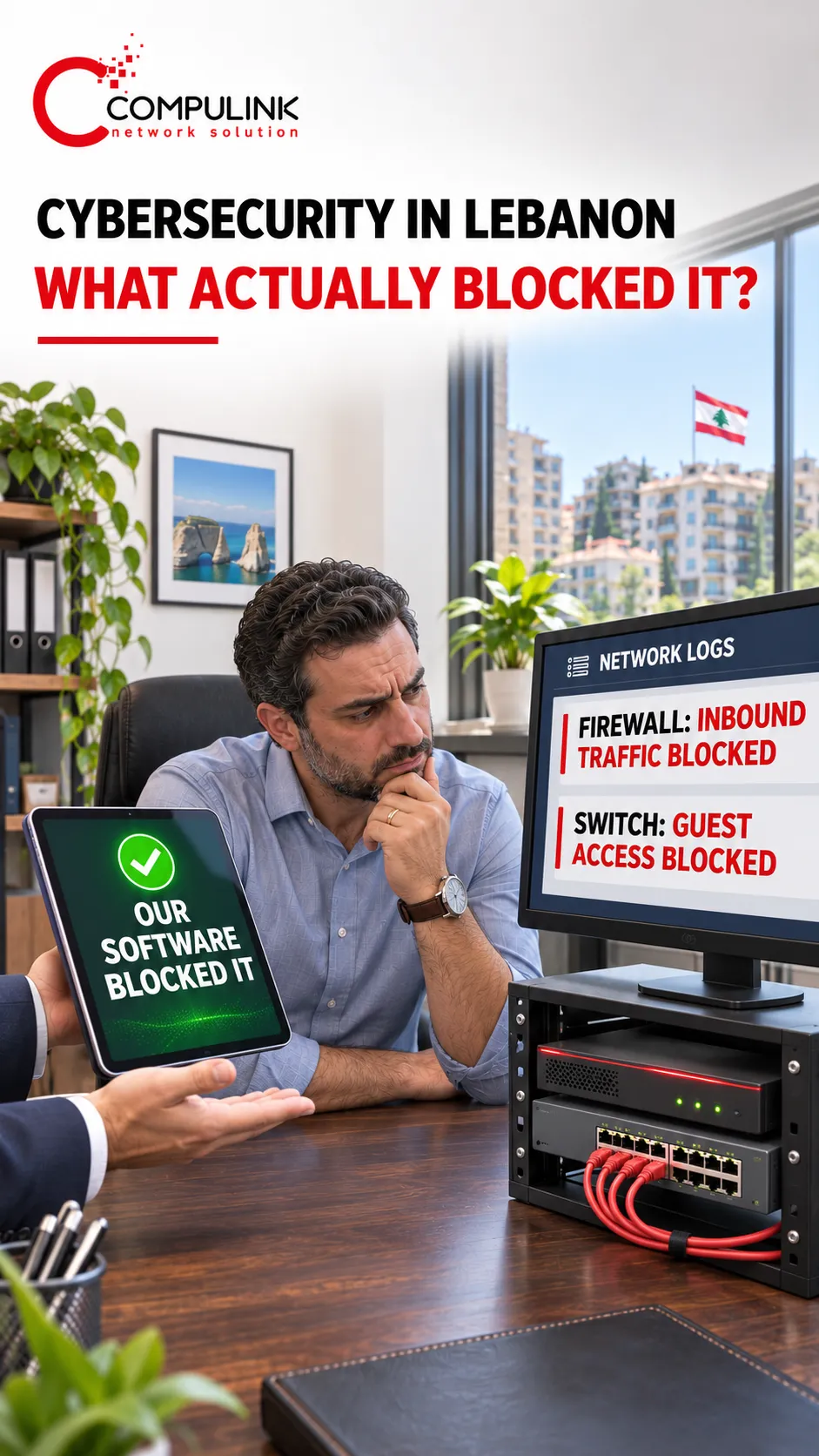
Cybersecurity in Lebanon: What Firewalls and Switches Already Protect
A Fortinet FortiGate controls and protects traffic between the internet and your private network. When a company makes a service available through its public IP address, the firewall can expose only the approved port, restrict who can connect, and inspect permitted traffic for threats. It can also block detected intrusions, filter harmful destinations, and encrypt connections between offices. A small office can use these controls to keep management ports private. A midsize company can use them across branches. A large enterprise can enforce them at data-center scale. Fortinet rates its FortiGate 7121F at up to 520 Gbps of threat protection in its tested configuration.
A managed Layer 3 switch protects the local network. Its access control lists (ACLs) determine which connections are allowed between the networks it routes. For example, office staff can reach the accounting server while guest devices are blocked. On supported switches, 802.1X can require authentication at a physical network port, DHCP snooping can block unauthorized devices from handing out network settings, and Dynamic ARP Inspection can stop devices from impersonating another device on the local network. The same controls can serve a single office or a large campus with thousands of devices. Here’s where the marketing becomes misleading. People hear “cybersecurity” and think of threats they recognize. A fake bank call. A text asking for a verification code. An email with a fake invoice. Some vendors use that fear to sell custom software for a different job: protecting the office network and its internet connection. Then they claim their software can outperform the firewall and the managed Layer 3 switch that enforce those protections.
That’s the bluff. A properly configured firewall can block unauthorized internet connections, protect the services you expose through your public IP, and inspect allowed traffic for threats. A managed Layer 3 switch can enforce access rules between the networks it routes and control who can connect to its physical ports. If the software only reports what happened while the firewall and switch do the blocking, the vendor is taking credit for protection those devices already provide.
Walk away from anyone selling that as complete cybersecurity. Your business could pay twice for the same protection and still leave staff unprepared for the fake call, text, or email that started the conversation.

Cybersecurity in Lebanon: What Actually Stopped the Traffic?
A large company already runs managed firewalls, switches, and security monitoring. A new vendor presents a dashboard that shows an attempted connection was blocked. The sales team calls it proof that their software stopped the connection.
The company’s network team checks the firewall logs and finds the firewall enforced the rule. The dashboard recorded the result.
Set up a controlled demonstration with your own technical team before buying. Define one specific claim and the result you expect. For example, confirm that a guest device can use the internet while access to a designated test server is blocked. Compare timestamps, the firewall or switch logs, and the vendor report.
Identify which component made the decision and which component displayed it. If the product adds a new action, have the vendor show who triggers it and how your team can verify it.
A platform that makes alerts easier to review may have value. Put a price on that benefit based on what your team can measure, such as time spent tracing an event across systems during a normal working week.
Define any additional access the product will need, who can approve changes, and how your company will retrieve its logs if the contract ends.
Put operating responsibilities in writing before deployment. Who handles an alert outside office hours? Who can change a firewall rule? Who restores the previous settings if an update causes trouble? Let the network team and the people responsible for incident response review the same scope.
Walk away if the seller promises more protection but cannot demonstrate what changes for the company.

Cybersecurity in Lebanon: Who Is Behind the Pitch?
A university student sits beside a business owner at a cybersecurity presentation. The speaker introduces himself as a trainer, consultant, and software developer. He shows a certificate and a polished dashboard. Both people leave impressed. Neither has seen a lesson, a completed client project, or a test of what the software does.
Some pitches come from independent sellers who offer several services under one name. Plenty of independent specialists do excellent work.
The warning sign is a person making promises across several areas and giving you the same sales presentation as proof for all of them. Teaching a beginner, configuring an enterprise firewall, and building a security product require different skills and different kinds of evidence.
Verify the claim that matters to you. For a course, look at a sample exercise and how the trainer grades it.
For consulting, look for a sample deliverable with client details removed and a clear explanation of how the work was verified. For software, watch a demonstration with an expected result you can check.
A customer name on a slide tells you little about the work the seller actually performed.
Look at who will do the work after you pay. The presenter may sell the service while an outside team performs it. The written offer should identify the people responsible and explain what happens if they become unavailable.
Keep your passwords and company files out of sales demonstrations. If the seller keeps pointing to titles and logos whenever the conversation turns to the work, pause the purchase. Choose someone who can show what they deliver to customers.
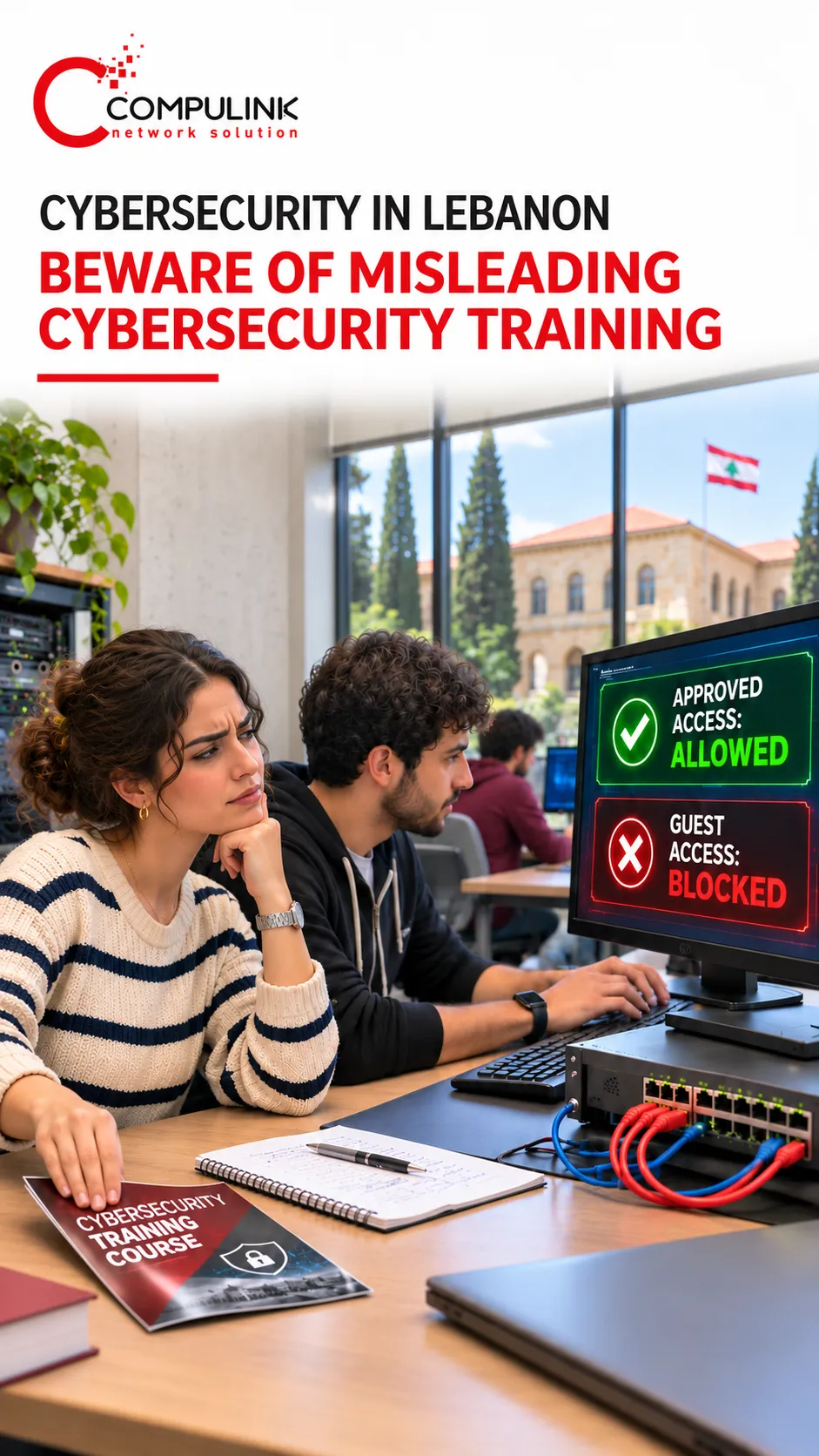
Cybersecurity in Lebanon: Beware of Misleading Cybersecurity Training
I have seen ads inviting university students and anyone interested in cybersecurity to register for a course. The ads describe the topics and promise a certificate. The pitch sounds technical, so students may expect to learn how to configure a firewall, protect a network, and test whether their work actually protects anything.
The problem starts when the course delivers only a few definitions and generic rules. Students listen, receive a certificate made by the seller, and leave thinking they have a professional qualification. A certificate of attendance tells you that someone issued a document. Its value depends on what you learned, what you practiced, and what you had to demonstrate to earn it. A logo and a signature cannot answer those questions.
My advice to students in Lebanon is simple. If an ad promises professional skills but gives you no clear syllabus, practical exercises, or assessment, skip the session. Start with official training from established vendors such as Fortinet, which makes FortiGate firewalls, Cisco, or Palo Alto Networks.
Use their official learning portals or authorized training providers, and check which courses prepare you for a certification exam. Fortinet For businesses buying a firewall, check which support plan is included with the device or available separately.
Fortinet offers FortiCare technical support. Depending on the plan and the issue, the support team can help troubleshoot remotely.
That support gives your team a way to escalate a problem with the equipment. Put your money toward training that lets you practice the work and products backed by a documented support plan.
Walk away from untested, unsupported custom software. fortinet.com
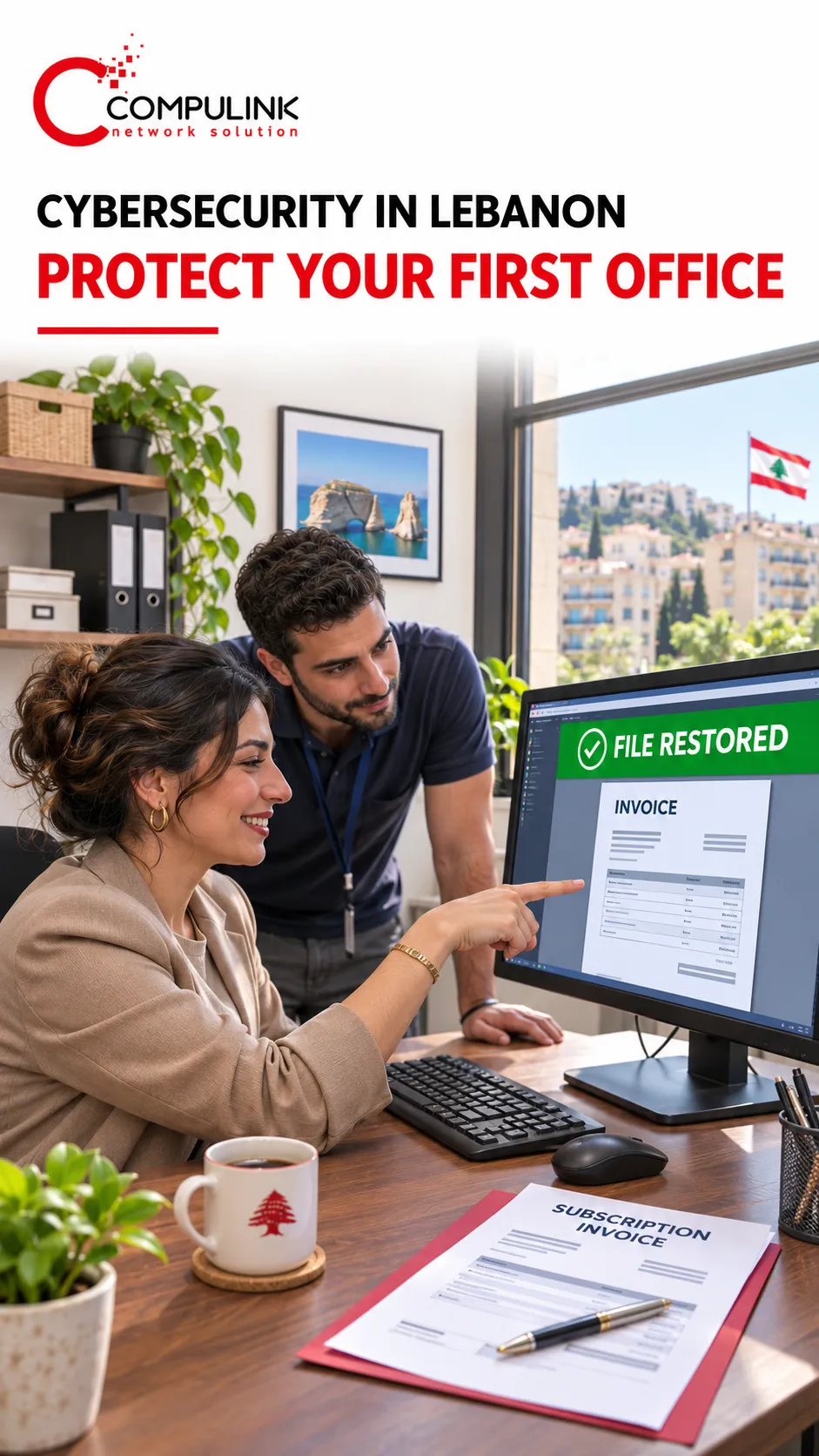
Cybersecurity in Lebanon: Protect Your First Office
A business owner is setting up her first office. A salesperson tells her a monthly package will take care of cybersecurity. She pays, assuming someone will protect her office computers and check her backups.
Months later, an accounting file disappears. She learns that recovery is outside the contract and that nobody has ever tested the backup.
Start with what your business needs to get through a working day. Most owners can name those things quickly. Email, invoices, payment approvals, and customer records are good places to begin.
Write down who looks after each one and who steps in if that person is unavailable.
That list helps you see which jobs a proposed subscription would actually cover.
Put the most urgent work first. Give staff individual accounts, keep guest Wi-Fi away from office systems, and make sure someone can restore a file you need.
Have the person responsible open a restored copy so you can see that it works. If a message claims a supplier has changed its bank details, staff should call the supplier using a number they already trust before sending money.
Agree on the results you will see before you pay. When the vendor promises to separate guest Wi-Fi, have them demonstrate that a guest can browse the internet while access to a designated office system stays blocked.
When they promise backup setup, include a restore test and a record of the result. Keep the scope, all agreed recurring fees, and test results in writing. If the offer leaves essential jobs without an owner, put your money toward getting them done.

Cybersecurity in Lebanon: Who Pays When Promises Fall Short?
A student pays tuition for skills she never gets to practice. A new business pays a monthly fee and later pays another team to fix the same gaps.
A large company buys a dashboard and discovers it is showing work its firewall already does. In each case, the buyer pays for a promise the seller fails to deliver.
The first loss is the money on the invoice.
The next loss is time. When a company loses customer records, project files, or accounting data, the damage can reach far beyond the cost of recovery.
Staff may have no way to finish work, bill customers, or collect payments. If the records cannot be recovered and the business cannot keep operating, the loss can put the entire company at risk.
Our advice to businesses in Lebanon is clear. Walk away from independent sellers who pitch custom software as complete protection and cannot show how they will support it when something goes wrong.
For systems your business depends on, choose established security vendors with decades of experience and a documented support plan. Have a qualified network specialist or authorized partner put the protections in place and test them.
Make sure the agreement names who handles an incident, how to reach them, who restores your data, and what the support covers.
Have your team restore a backup and open the files it needs to run the business.
If a seller cannot show who will answer the call or how recovery will work, decline the offer before you give them access to the systems that keep your company running.

Cybersecurity in Lebanon: What Are They Selling?
The salesperson opens with a story about a fake bank call that cost someone money. Then comes a slide promising complete protection. The business owner hears that someone will secure the office, watch for trouble, and step in if anything goes wrong. The quote on the desk says monthly reporting.
The difference can become expensive.
Security services can cover several kinds of work. An assessment finds gaps. Implementation fixes agreed problems. Monitoring watches for signs of trouble.
Incident response defines who acts when something happens. A provider can sell any of those services on its own. The sales pitch becomes misleading when the customer is led to expect work the contract leaves out.
Read the offer beside your notes from the presentation. Mark every promise that matters to your business. Find the corresponding line in the contract.
If the vendor says it will secure your firewall, the scope should describe whether it will review the rules, change them, and verify the result. If it says it will respond to attacks, the agreement should explain who picks up the call, when they are available, and what they will do.
Check the full cost before paying. Setup, subscriptions, renewals, and emergency support can appear as separate charges. Make sure you know which tasks are billed separately and confirm how cancellation works.
Before you sign, save the written offer and any commitments made by email.
If a seller rushes you to pay while the services are still unclear, walk away. A convincing story about someone else’s loss tells you very little about the service you’re buying.

Cybersecurity Services in Lebanon: COMPU LINK’s Advice for Companies
At COMPU LINK, our advice to businesses, students, and anyone seeing cybersecurity ads in Lebanon is simple. Walk away from anyone who promises complete protection, asks for money, and cannot explain what they will install, test, or support.
A convincing advertisement can sell a subscription in minutes. Recovering lost files, getting staff back to work, and rebuilding customer trust can take far longer. For a company that depends on those records, the loss can threaten the entire business.
Start with established manufacturers such as Fortinet, Cisco, or Palo Alto Networks. Contact them through their official websites or authorized partners. Choose training that teaches your staff to work with the equipment they actually use.
Learn how your firewall protects services exposed to the internet and how your managed switch restricts access inside your office. If you are a student, start with official courses and practice labs. If you are buying equipment, confirm in writing who provides technical support and what that support covers.
Have a qualified specialist configure the equipment and show your team which connections are allowed and which are blocked. Keep the test results and make sure your staff know whom to call if something goes wrong. Walk away from unsupported custom software sold as a replacement for these protections.
We have explained what cybersecurity covers and where the sales claims fall short. The next step belongs to each of us. Pause when a call, text, or email pressures you to share information or send money. If you have questions about protecting your network, call COMPU LINK at +961 3 696 885.